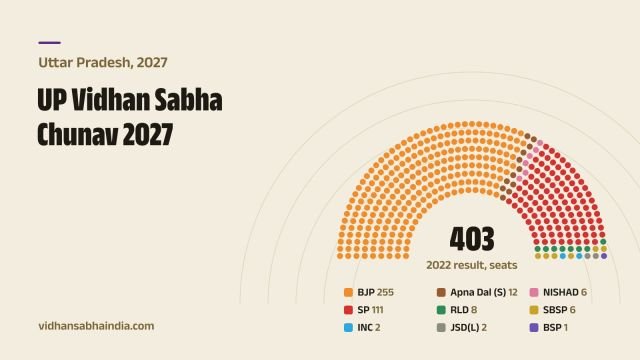
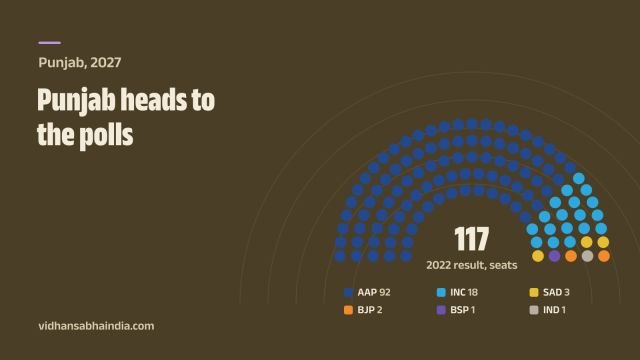
If you will vote in the 2027 assembly elections, the next few weeks are the time to make sure your name is on the list — and spelt correctly. The Election Commission of India is running a Special Summary Revision (SSR) of electoral rolls in 17 states and union territories, with 1 January 2027 as the qualifying date.
Your name must be on the final electoral roll to vote. A voter ID card on its own is not enough.
Key dates
- 12 November 2026: integrated draft electoral rolls published.
- 12 November – 11 December 2026: period for claims and objections.
- By 28 December 2026: claims and objections disposed of.
- 4 January 2027: final electoral rolls published.
Which states are covered
The revision covers Andaman and Nicobar Islands, Assam, Bihar, Chhattisgarh, Goa, Gujarat, Kerala, Lakshadweep, Madhya Pradesh, Manipur, Puducherry, Punjab, Rajasthan, Tamil Nadu, Uttar Pradesh, Uttarakhand and West Bengal.
That list includes all five states whose assemblies end between March and May 2027 — Uttar Pradesh, Punjab, Uttarakhand, Goa and Manipur. The Commission said schedules for other states, including Himachal Pradesh and Jammu and Kashmir, will be announced separately, with weather conditions in mind.
SSR is not SIR
The Commission has stressed that this is a summary revision, not a Special Intensive Revision (SIR). The difference matters:
| Special Summary Revision (SSR) | Special Intensive Revision (SIR) | |
|---|---|---|
| What it does | Updates the existing roll | Rebuilds the roll from scratch |
| House-to-house visits | Not required | Booth Level Officers verify every household |
| Focus | Adding new and young voters, correcting entries, removing dead, shifted and duplicate names | Fresh enumeration of every elector |
| Legal basis | Section 21 of the Representation of the People Act, 1950 | Same section, special order of the Commission |
Several states, including Uttar Pradesh, went through an SIR in 2025–26. In UP, the final roll published on 10 April 2026 listed 13,39,84,792 electors — 84,28,767 more than the draft published in January. The current SSR is a lighter update on top of that.
Step 1: check if your name is on the draft roll
- Go to the Voters’ Service Portal at voters.eci.gov.in or open the Voter Helpline app.
- Choose Search in Electoral Roll. You can search by your EPIC (voter ID) number, by your details (name, age, relative’s name, district and constituency), or by your registered mobile number.
- Check your name, age, address, photograph and the name of your father, mother or spouse.
- Note your part number and serial number. These tell polling staff where to find you on election day.
The draft roll is also displayed at your polling station and with your Booth Level Officer (BLO). You can call the national voter helpline on 1950 (add your state’s STD code if calling from a landline in some states).
Step 2: use the right form
| Your situation | Form |
|---|---|
| You are not on the roll, or you turn 18 on or before 1 January 2027 | Form 6 — new registration |
| You moved house, within or outside your constituency | Form 8 — shifting of residence |
| Your name, age, photo, relative’s name or address is wrong | Form 8 — correction of entries |
| You need a replacement voter ID card | Form 8 — replacement EPIC |
| You want to mark yourself as a person with disability | Form 8 |
| A name should be removed (death, shifted, duplicate) or you object to an entry | Form 7 — objection or deletion |
| You are an Indian citizen living abroad | Form 6A — overseas elector |
All of these can be filed online on the Voters’ Service Portal or the Voter Helpline app, or on paper with your BLO or the Electoral Registration Officer (ERO). Online, you will get a reference number to track your application.
Documents you may need
- Age proof (for Form 6): birth certificate, Class 10 or 12 mark sheet, passport, PAN card, driving licence or Aadhaar, among others.
- Address proof: Aadhaar, passport, bank or post office passbook, a recent utility bill, rent agreement or other documents listed on the form.
- A recent passport-size photograph in digital form for online applications.
Linking Aadhaar to your voter entry is voluntary.
Turning 18 later in 2027?
You can apply in advance. The Commission accepts advance applications from young people who will turn 18 on the later qualifying dates of 1 April, 1 July or 1 October 2027. Your name is added in the quarter in which you become eligible.
After 4 January
Once the final roll is published you can still apply — continuous updating carries on — but the roll used for an election is frozen once nominations close. If you miss the cut-off, you may not be able to vote in that election. Do not wait for the schedule to be announced.
When your registration is approved, you can download a digital voter ID, the e-EPIC, from the Voters’ Service Portal using your registered mobile number.
Quick answers
My name is on the roll but my voter ID card is old. Is that a problem?
No. What matters is your entry on the roll. On polling day you can show your EPIC or any of the alternative photo identity documents allowed by the Commission.
I moved from Lucknow to Noida. Do I register again with Form 6?
No. Use Form 8 and choose shifting of residence. Your old entry is removed when the new one is added, which avoids duplicate registration.
Can someone remove my name without telling me?
Objections filed through Form 7 are verified, and the person concerned is given notice. Check the draft roll early so that you have time to respond before 11 December.
Official help: voters.eci.gov.in, the Voter Helpline app, helpline 1950, or your Booth Level Officer. Vidhan Sabha India is an independent website and cannot process applications.